How to Install a High Security Door Lock: Protect Your Home with Enhanced Door Security
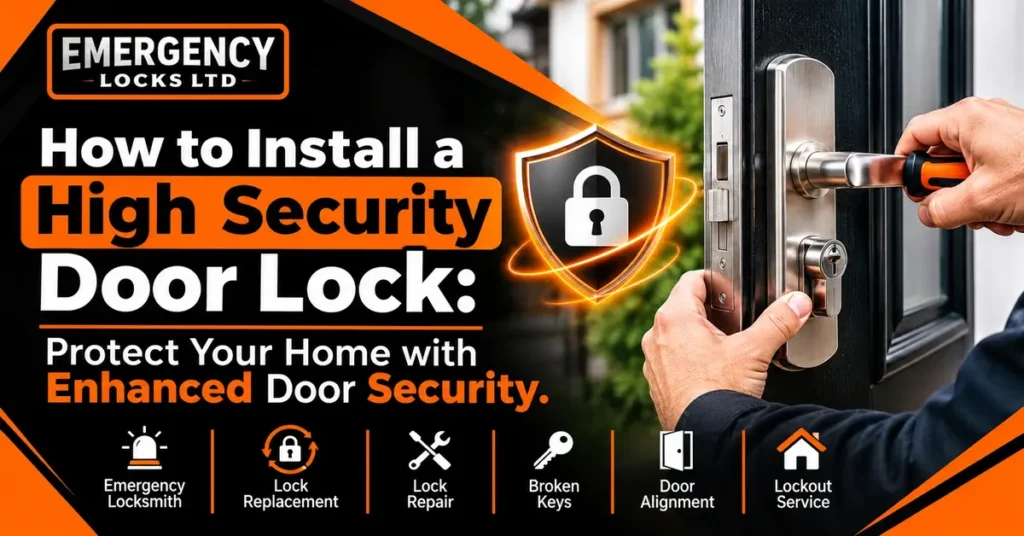
Your front door is the first thing between your family and the outside world. Your home can be in danger if your lock is weak. Burglars are searching for the low-hanging fruit. A simple lock provides them with just that. Fortunately, you can correct the issue without a professional’s help. Installing a high-security door lock is not as difficult as it seems. Professionals are not required. You can upgrade your old door with the proper tools and a good plan in just a couple of hours.
This course will take you through each step. It also explains how to select the right lock and make door locks safer throughout your entire home.
It is important to grasp the concept of “high security” locks before making any purchase. High Security Door Locks are designed to withstand picking, drilling, bumping and snapping. It complies with stringent requirements including British Standard BS3621. Hardened steel parts and complex keyways are used in these locks. Some have anti-snap, anti-bump and anti-pick features. They are more expensive than standard locks, but they provide much greater protection. Knowing this helps you make an intelligent purchase while shopping.
The right lock is the halfway mark. First, see what type of door you have. There are various types of locks for uPVC doors compared to wooden doors. Secondly, check for the BS3621 mark. This is an example of the lock having withstood the rigours of security testing. Third, inspect the lock cylinder. A good cylinder is anti-snap, anti-bump and anti-pick. Fourth, make sure the lock is the correct size for the door. Carefully measure the old lock. Last but not least, read the reviews and purchase from a reputable brand. It is a false economy to have a cheap lock. Pay attention to peace of mind.
Collect all the materials before the task. A screwdriver set, a tape measure, a pencil, a chisel and a drill will be needed. A hammer and utility knife might also be required. Have your new high-security lock, lock screws and strike plate ready. A dust sheet and safety glasses are good suggestions too. Place a sheet on the floor to clean up the mess. Wear eyeglasses to prevent eye injury. A well-organised work area helps work be faster and safer.
First of all, you need to get rid of the old lock. Remove the handles and lock the body. Store screws in a screw cup to prevent loss. Carefully remove the obsolete cylinder. Clean the opening and inspect the door for damage. Then measure the new lock against the old. The holes should be in alignment. If they don’t, then with your pencil, circle the new locations. Make the holes in the new parts slowly. Test fit the lock before screwing it in place. When fitted, place the appropriate screws. Install the handles last and ensure that the key moves freely. Your new lock has been installed.
uPVC doors are common and require special care. A majority of them use the same euro cylinder lock. Learning how to fit a high-security door lock on uPVC doors means learning about the cylinder. Find the fixing screw on the edge of the door. It holds the cylinder in place. Remove this screw. Examine the key and pull the cylinder out, turning the key slightly. Slide in the new anti-snap cylinder. Be sure it sits flush with the door. Tighten the re-fixing screw firmly. Next, test the key on each side. The door must move smoothly when locking and unlocking. If it sticks, ensure that it is aligned.
Anti-snap lock is used to prevent one of the most popular break-in techniques. The burglars pull out the cylinder and break it off. An anti-snap lock is a lock that is designed to operate in a safe location, while holding a door shut. The steps to install an anti snap lock are easy to learn once you know how to do it. Old cylinder: Measure the length from the middle of the cylinder to either end. Get a replacement of the same size. Replace the old cylinder in the same fashion as described above. Slide in a new anti-snap lock. Tighten the fixing screw. Make sure the lock is not protruding too much. A perfectly fitting size is best. Check and test the lock and ensure that the door is closing correctly.
A good lock is a great start, but you can do more. Consider installing a door chain or door limiter for added security. Install a London bar or Birmingham bar into the frame. The metal bars prevent the door from opening. Install long screws in the strike plate. Short screws can be easily removed. Long screws are driven into the wall studs and are very tight. Install a security light outside the door. Burglars don’t like to be noticed. Never leave spare keys outside or in the house. It’s the small things that make a difference in protection!
Your door itself matters as much as the lock. Even the best locks will allow a weak door to be broken. Fit a solid-core door or a door with a steel plate. Inspect the frame for rot or cracks. Fix any areas of weakness. Install hinge bolts to prevent the door from opening off by itself. Install a spy hole and a door viewer. These allow you to view those outside without opening. Keep bushes near the door short, so no hiding places. These steps show how to make your door more secure in ways beyond the lock itself.
uPVC doors are strong but have weak points. The cylinder is the main one, so fit an anti-snap lock as described in the guide. Check door handles. Flimsy handles break easily. Replace them with strong and trusted ones. Some lock problems require professional help. Choose Emergency Locksmith Ltd services to experience the best service.




Emergency Locks Ltd – fast, reliable locksmith services across London. 24/7 emergency call-outs, no call-out fee, fully insured & DBS checked. Lockouts, lock repairs, UPVC fixes & key cutting, we aim to be with you within 30 minutes.
Copyright © 2026 Emergency Locksmith by Apex Soul Tech. All rights reserved.
WhatsApp us