Why Do Keys Snap in Locks? 5 Causes and How to Stop It Happening Again
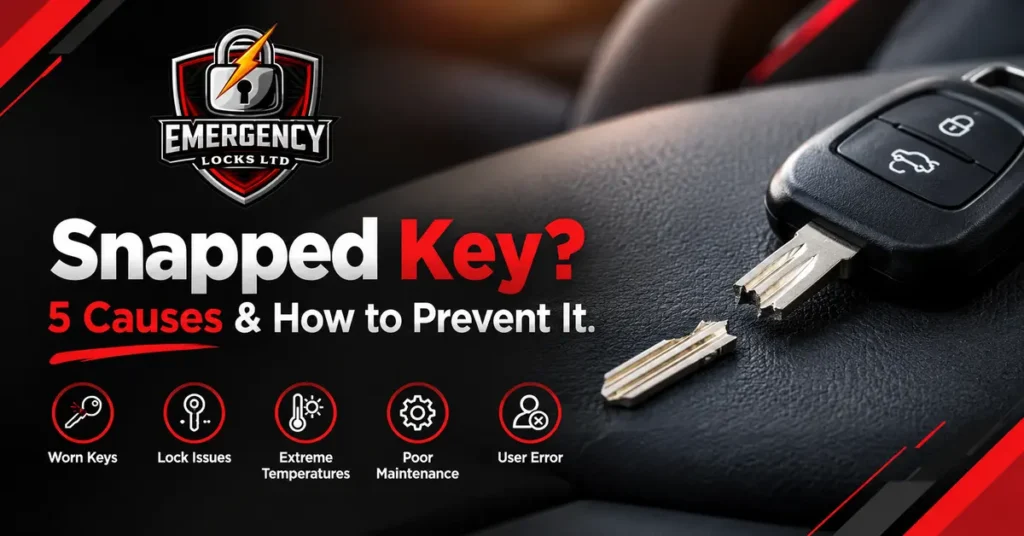
Have you ever heard a snap when turning a key in a lock? If you break a key, you can end up locked out of your vehicle or unable to lock your property. It can also be hard to extract the broken piece without harming the lock.
If you are wondering why keys snap in locks, there are several common reasons. The key is old, the lock is stiff, or you are using too much force. If you know what’s causing the problem, you can avoid it in the future.
The following are the causes of keys snapping:
Wear and tear is one of the most frequent causes of a broken key. Keys are used often and can deteriorate with use. Small cracks and worn edges can occur and may not be readily apparent. A worn key snapping inside a lock is more likely when you apply pressure to turn it. If your key is bent, thin or damaged, replace it before it breaks.
Don’t use an old key as a spare key. For this, make another copy from a good-quality original.
Extra pressure on your key can be caused by a stiff lock. If the internal parts are not functioning as they should, it takes more than usual pressure to move. This is the reason for a stiff lock-turning key issue. The key may be fine, but the lock could need cleaning, lubrication or repair.
Do not force or push the key if it does not turn easily. Instead, stop and check the lock. It may bend or break the key if it’s forced.
Over time, locks can accumulate dust, dirt and small particles. These can cause them to get jammed and make it more difficult to turn the key. This can also be the reason for this situation: Your key is sticking when unlocking your door. Do not ignore a key that sticks repeatedly.
If the lock requires lubrication, use an appropriate lock lubricant. Do not put inappropriate oils, household items or other items into the lock; they attract dirt and lead to additional issues.
A damaged-looking key can wreak havoc. A slight bend impacts its movement within the lock. Another issue with poorly cut duplicate keys is that they may not have the proper grooves or edge on the key. They may work initially, but put additional strain on the lock.
If the key is not feeling like it should, or has to be moved around in the lock before it will engage, do not use it. Get a properly cut replacement key.
In other cases, it is not the key, per se. A door moves a little over time. Hinges can become loose, or the door frame can move. This can create extra stress on the lock when inserting or rotating the key. Notice that the key moves freely through the door and is harder to move when closed.
If this occurs, the door or lock needs adjustment. Fixing the underlying issue can prevent key snapping in locks.
The first key to preventing a key break is to stay alert to minor indications. Avoid using a key that is too tight to turn. Replace bent, cracked or worn keys. Make sure locks are clean and lubricated. Avoid hanging heavy keyrings. When additional weight is added to the key and lock, it puts undue strain on the lock.
If a key keeps sticking, don’t repeatedly turn the key. The locksmith can examine the lock and determine the cause before the key snaps.
In case a key breaks in the lock, you should not push the broken key further into the lock. Don’t try to force it out with another key or sharp object. If you can access part of the key, it is possible to gently take it out. However, forcing it can damage the lock. A professional locksmith can safely extract the broken key and determine if there is a problem with the lock.
No. Forcing it out can push it further in and damage the lock. Call a locksmith.
Usually not. The piece can be extracted and the lock keeps working as before.
Sticking is a warning sign, usually a worn key or a dirty, stiff lock. Forcing it is how keys snap.
A new key that sticks means the lock needs attention. An old key that's grown stiffer is likely worn.
Leave it in place. Don't try to turn or dig it out. Call a locksmith to extract it safely.
It’s awful to be locked out of your house. But it is fixable. Stay calm. Look for any doors that are open. Call a friend or landlord. One final option: call a locksmith for immediate assistance.
Contact Emergency Locks LTD for the best services at affordable prices.



Emergency Locks Ltd – fast, reliable locksmith services across London. 24/7 emergency call-outs, no call-out fee, fully insured & DBS checked. Lockouts, lock repairs, UPVC fixes & key cutting, we aim to be with you within 30 minutes.
Copyright © 2026 Emergency Locksmith by Apex Soul Tech. All rights reserved.
WhatsApp us